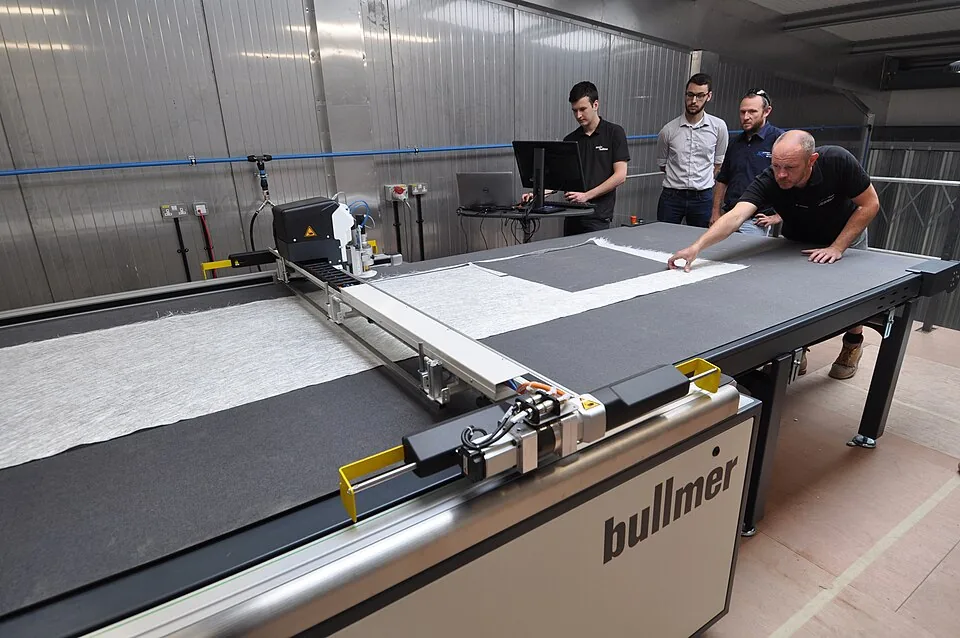
Quote from an estimated routing
Setup, run and material at standard produce the quote price; the same estimate becomes the job's plan on order.
Every order is different: quoting from estimated routings, job costing, and a schedule that changes daily.
A job shop makes to customer demand and needs to compare the estimated route with the work actually performed. The authored core links WorkOrders to SalesOrders and retains production costs. Review the following job-shop policies and any required extensions before configuring the application.
Setup, run and material at standard produce the quote price; the same estimate becomes the job's plan on order.
A job can carry its own bill and routing without polluting the item master. Repeat jobs copy the last one.
Every issue, hour and outside-processing invoice posts to the job. Estimate versus actual is on the job record while it runs.
The supervisor's list is the plant's real schedule; splits and hot jobs are normal.
Received as customer-owned stock, issued to the job, never valued as yours.
Quote from an estimated routing
One-off bills
Customer-supplied material
Dispatch by due date and priority
Job costing
Same records, same gates. The configuration changes how the process runs for this plant.
The assigned Approver reviews submitted requisitions and POs, records the decision in Approvals, and approves the purchase (Status: Submitted → Approved).
Approval waits for the approver.
Owns MRP, work-order release, scheduling, and BOM/Routing maintenance.
Runs the floor — assigns operators, posts production, handles holds.
Executes assigned production operations; separately assigned receiving and stock-handling permissions cover warehouse work.
Manages procurement of raw materials and components.
Performs inspections and dispositions non-conforming material.
Owns the general ledger, payables, and receivables for manufacturing transactions.
Makes assigned purchasing and control decisions independently of the person who requested or prepared them.
Items, bills of material, routings and engineering change, with revision control on all of it.
Work orders, dispatch, operations, labour, material issue, scrap and completion, recorded where the work happens.
Demand, master schedule, MRP and capacity: from what customers want to what the plant and suppliers must do, with every planned order traceable to its demand.
Requisitions, sourcing, purchase orders, receiving, three-way match and supplier performance, with approval where money is committed.
Standard costs, cost rollups, work-in-progress, variances and the journal entries that make every movement a posting.
Inspection plans, incoming and in-process inspection, non-conformance, corrective action, holds and certificates, tied to the exact lot or order.
Warehouses, locations, lots and serials, every stock movement, cycle counting and valuation that reconciles to the ledger.
On-time delivery %, incoming-inspection reject %, and price variance per vendor.
Standard-cost valuation by item type (Raw, WIP, FG) and warehouse, reconciled to GL inventory accounts.
Components short to cover demand, grouped by lead-time bucket and buyer.
The specification defines multi-level bills, dated bill revisions and versioned routings. Released work orders retain their referenced bill and routing. Phantom items, component substitutes and serial-based effectivity need to be included explicitly in the rollout scope where the plant uses them.
Related questionThe authored model uses standard costing, pending standards and reviewed cost rollups. Average costing requires an agreed extension and reconciliation checks; it is not represented by the current item fields.
Related questionYes. The ledger is included, but journals export by period to a group ledger if that is where consolidation happens.
Related questionEvery order is different: quoting from estimated routings, job costing, and a schedule that changes daily.
Stable products in volume: rate-based schedules, backflushing, line-side stock and takt, with the ledger still exact.
Formulas instead of bills, yields, potency and shelf life, lot genealogy, and the batch record a regulator can read.
Long-lead, designed-to-contract products: project structure over the plan, milestones, progress billing and cost to complete.